Watch: Dill
Dill
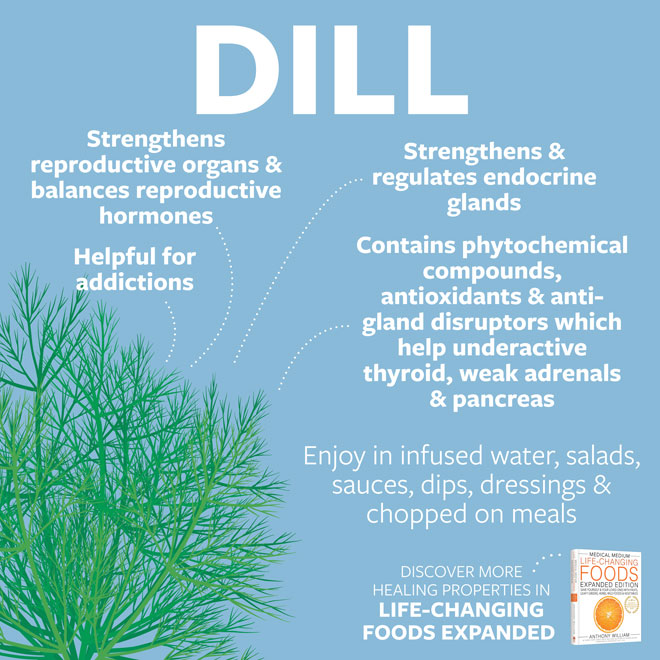
Dill is a hormone-balancing herb. Many of dill’s phytochemical compounds and herbal antioxidants gravitate to the endocrine system to strengthen and help regulate endocrine glands that are overactive or exhausted from overuse.
Phytochemical compounds in dill target weakened adrenals and underactive thyroid. It contains specific nutrients, which we can call anti–gland disruptors, enter cells and reduce trigger reactions within these glands by stimulating cell-protecting reactions so the endocrine glands do not fluctuate radically. Instead, regulation becomes more even and balanced.
An overworked pancreas can lose its ability to properly self-regulate and not produce the insulin on an even-keel basis. The combination of an exhausted pancreas and exhausted adrenals can ring off potential alarm bells in the central nervous system that call for an immediate healing crisis, where immune cells are sent out to try to buffer the crisis. This can mean an individual experiences a host of symptoms until the immune system calms the symptoms down and helps to do some restoration and repair.
Dill is a regulator because of its phytochemical compounds, antioxidants, and anti–gland disruptors, which can feed a weakened pancreas, tired adrenals, and inflamed thyroid, allowing these glands to level out and hold on to reserves. Dill’s properties best work at night, when someone is sleeping, when the endocrine system is resting and dialed back.
Dill also helps to strengthen reproductive organs and balance reproductive hormones. Dill is high in antioxidants that only certain herbs carry. These herbal antioxidants slow down the aging process by reducing overall endocrine gland degeneration. Dill is also helpful for addictions. Addictions rely on adrenaline. As dill’s properties are regulating adrenals, this can give someone who is facing an addiction additional support.
Discover more healing properties in Life-Changing Foods Expanded.
This item posted: 26-Aug-2026