Watch: Pineapple
Pineapple
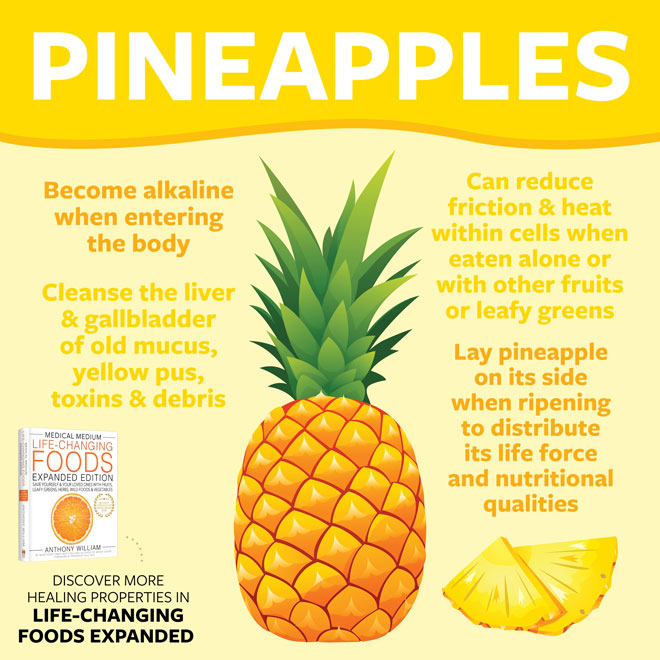
For a pineapple to perform nutritional tasks that have been bestowed upon it by God and the Earthly Mother, you have to lay the pineapple on its side during its ripening phase and rotate it (for example, every 12 hours.) If a pineapple is not ripened on its side and you’re sharing the pineapple with someone who eats a different part of the pineapple, they’re not going to get the same nutritional profile of various minerals, nutrients, enzymes, and phytochemical compounds as well as the glucose you get from the pineapple section you eat. When a pineapple ripens lying down, it distributes its life force and nutritional qualities more evenly.
Even though pineapple is acidic in nature, it turns alkaline when entering the body. Pineapple’s intense fruit-acidic nature becomes an alkaline-based acid when it hits the blood. That alkaline-based fruit acid is extremely astringent. It has the ability to enter cells all throughout the body with ease because its astringency is attached to the pineapple’s glucose. A pineapple’s high rate of glucose is close to equal with its astringency. The alkaline-based acids from the pineapple attach themselves to the sugar of the pineapple and then are easily able to knock on doors and be let into virtually every cell in the entire body.
The pineapple is a liver cleanser and gallbladder cleanser. It contains mechanisms—chemical-compound dispersing agents—that act as a degreaser to clean up old mucus, yellow pus, toxins, gunk, and debris out of the liver and gallbladder. When pineapple is not eaten with overt fat (such as animal protein, eggs, dairy, avocado, nuts, seeds, and oils), and the pineapple is instead eaten alone or with other fruits and/or leafy greens, herbs and spices, wild foods, and vegetables—free from added overt fats, the pineapple has the ability to reduce friction and heat within cells and tissue throughout the body.
Discover more healing properties in Life-Changing Foods Expanded.
This item posted: 31-Aug-2026