Watch: Sweet Peppers
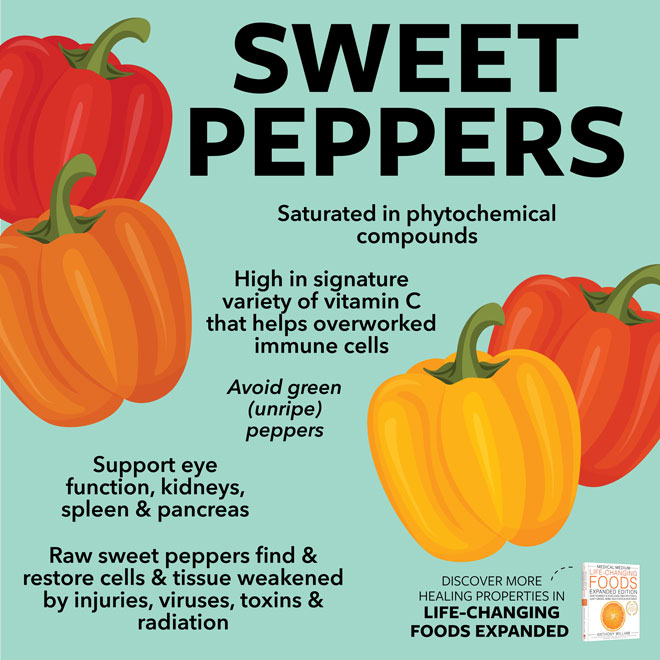
Sweet Peppers
Sweet peppers are saturated in phytochemical compounds. These compounds have a mixture of glucose, minerals, flavonoids, potassium, beta-carotene, and even mild levels of sulfur, with a trace level of capsaicin. When you roast a sweet bell pepper, something happens that’s distinctive from cooking other fruits or vegetables. A specific odor that’s unique to sweet peppers is released into the air, because of these phytochemical compounds. The more aroma is present, the higher the composition of nutrients.
Sweet peppers also contain hydrobioactive water, so when the sweet pepper cells containing this hydrobioactive water break down inside the mouth and the stomach, little bursts of this water find their way easily into our own cells, starting a hydration process.
Sweet peppers are high in vitamin C. Not just any old vitamin C, a signature variety that supports immune cells that are specifically overworked. Immune cells do not have to wait for this vitamin C to go through an entire, lengthy processing by the liver. There’s an enzyme in sweet peppers that immune cells use to transfer the vitamin C from a sweet pepper into an immune cell, which allows immune cells to quickly alter that vitamin C so it can be in immediate use and not have to enter the liver.
The vitamin C and beta-carotene in sweet peppers support all functions of the eye. Sweet peppers also help support the kidneys, spleen, and pancreas, and they have traces of selenium when grown in their most fertile soil. Sweet peppers’ vitamin, mineral, and antioxidant compositions are also incredibly potent.
Only when eaten raw, sweet peppers have a mission when they enter the human body. Raw sweet peppers find weakened areas within us that are compromised by injuries, viruses, and toxins, including radiation exposure—areas of our body that need restoration—to help restore cells and damaged tissue.
Avoid green (unripe) peppers.
Discover more healing properties in Life-Changing Foods Expanded.
This item posted: 27-Aug-2026